
Scientific Research
A curated collection of peer-reviewed literature and study references relating to human-derived biologic materials. Presented for educational and informational purposes for qualified professionals.
Educational use only. The third-party literature referenced below is provided for scientific and informational purposes. Nothing on this page is a claim that any GGEVITYY material is intended to diagnose, treat, cure, prevent, or mitigate any disease or health condition.
Natural Biologics Foundations
Peer-reviewed literature on umbilical cord tissue, Wharton's Jelly, mesenchymal stem cells, extracellular vesicles, cellular physiology, and the regulatory framework surrounding biologic materials. Provided for educational reference only.
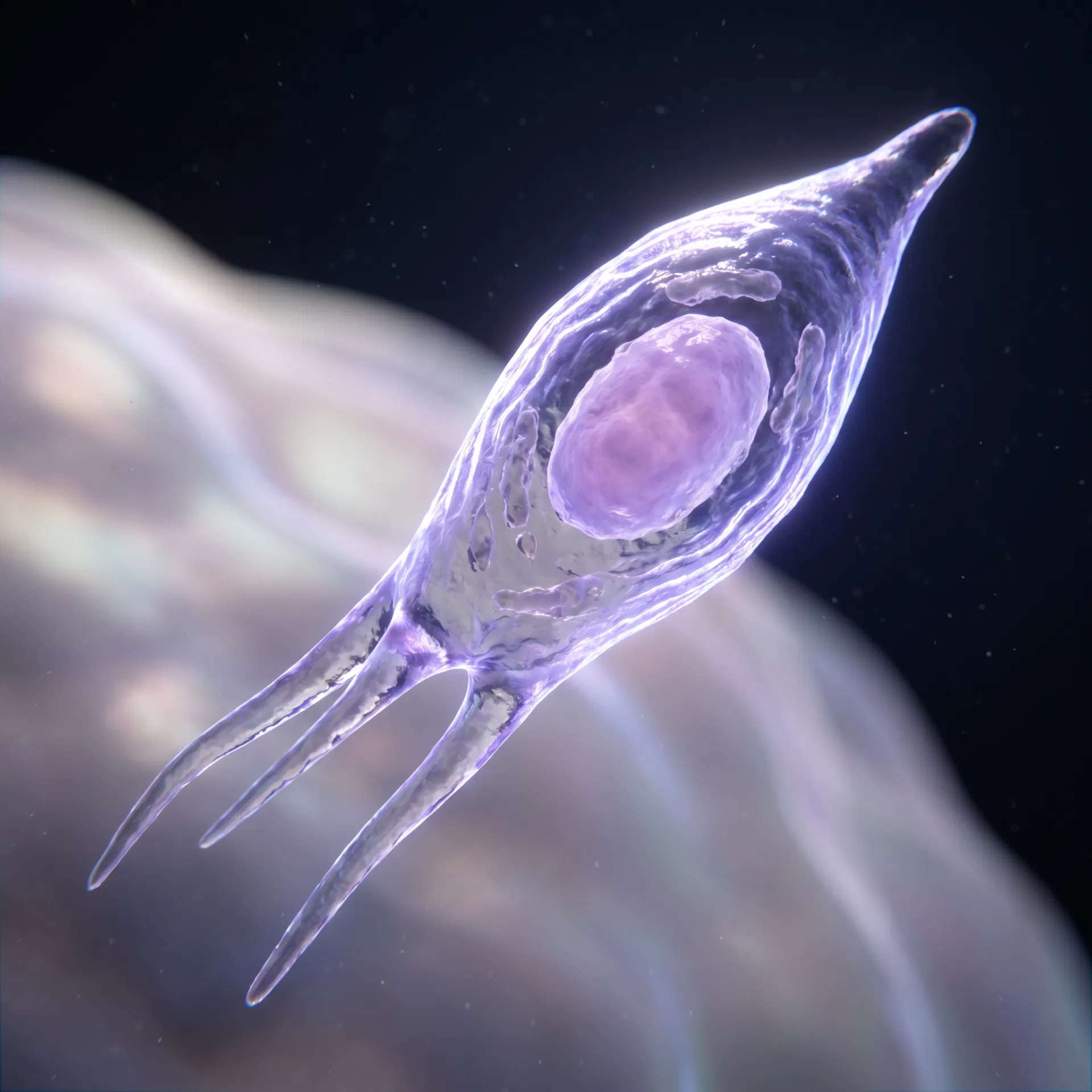
What does the natural biologics literature study?
Published scientific research in this field examines topics including:
- Functional biology research
- Cell and tissue biology
- Cellular inflammatory processes
- Comfort-related scientific literature
How does the literature describe inflammation?
In the scientific literature, cellular inflammation is described as a defense mechanism and part of the immune system's response to stimuli such as damaged cells, pathogens, toxic compounds, or irradiation. Researchers note that inflammation is not inherently “bad” — it is described as part of normal biological processes. The literature discusses how a sustained imbalance between inflammation and recovery may be associated with chronic inflammation.
This section summarizes how published research characterizes these biological processes. It is provided for educational and informational purposes only and does not describe the intended use, performance, or effect of any GGEVITYY material.
Topics discussed in the referenced literature:
How does the literature describe umbilical cord tissue?
Scientific literature describes the biological characteristics of the umbilical cord as being associated with Wharton's Jelly (WJ). Published research characterizes Wharton's Jelly as containing the following components:
Extracellular matrix
Described in the literature as making up roughly 95% of Wharton's Jelly by wet weight, including collagen, glycoprotein, hyaluronic acid, sulfated glycosaminoglycan, and diffusible plasma proteins. Collagen I is reported as the most common protein in Wharton's Jelly.
Mesenchymal stem cells
The literature reports Wharton's Jelly as having a high concentration of mesenchymal stem cells relative to tissues with a rich extracellular matrix. These cells are described in research settings as immunoprivileged and non-tumorigenic and are studied in laboratory settings for their biological characteristics.
Growth factors, cytokines, and extracellular vesicles (exosomes)
These substances are studied in scientific literature for their biological properties in laboratory and research settings.
What is Natural Biologics?
Umbilical Cord-Derived Wharton's Jelly for Regenerative Medicine Applications
Umbilical Cord-Derived Mesenchymal Stem Cells: Advantages and Potential Clinical Utility
Human Umbilical Cord-Derived MSCs as Advanced Therapy Medicinal Products
Advances in Mesenchymal Stem Cell Exosomes: A Review
FDA Position on Commonly Injected Biologic Materials
Understanding the FDA Regulatory Framework for Biologics
Literature Citations
- 1.Jessop, Z. M., Al-Sabah, A., Francis, W. R., & Whitaker, I. S. (2016). BMC Medicine, 14(1), 115. doi.org/10.1186/s12916-016-0669-4
- 2.Gupta, A., El-Amin, S. F., Levy, H. J., Sze-Tu, R., Ibim, S. E., & Maffulli, N. (2020). Journal of Orthopaedic Surgery and Research, 15(1), 49. doi.org/10.1186/s13018-020-1553-7
- 3.Nagamura-Inoue, T., & He, H. (2014). World Journal of Stem Cells, 6(2), 195–202. doi.org/10.4252/wjsc.v6.i2.195
- 4.Mebarki, M., Abadie, C., Larghero, J., & Cras, A. (2021). Stem Cell Research & Therapy, 12(1), 152. doi.org/10.1186/s13287-021-02222-y
- 5.Tang, Y., Zhou, Y., & Li, H.-J. (2021). Stem Cell Research & Therapy, 12(1), 71. doi.org/10.1186/s13287-021-02138-7
- 6.Golan, M. E., & Stice, S. L. (2024). Extracellular Vesicle, 3, 100041. doi.org/10.1016/j.vesic.2024.100041
Musculoskeletal Research Literature
Peer-reviewed literature examining umbilical cord tissue, Wharton's Jelly, and exosomes in the context of joint, tendon, and musculoskeletal research. Much of this evidence is early-stage, observational, or preclinical. Listed for educational reference; inclusion does not imply any GGEVITYY product claim.

Wharton's Jelly Tissue Allograft and Knee OA — Observational Cohort (Davis et al., 2022)
Wharton's Jelly Tissue Allograft and Hip OA — Retrospective Cohort (Lai et al., 2024)
Umbilical Cord Tissue and Knee OA — Case Report (Gupta et al., 2021)
Umbilical Cord Tissue and Knee Research — Preliminary Study
Allogenic Umbilical Cord Tissue as a Scaffold for Ankle Osteoarthritis
Exosomes Derived from UC-MSCs and Tendon Injury — Signaling Pathway Study
Clinical Outcome of Achilles Tendon Repair Using Viable Intact Cord Tissue
Mesenchymal Stem/Stromal Cells and Rheumatoid Arthritis Research
Literature Citations
- 1.Davis, T. A., et al. (2022). Regenerative Medicine Reports / Biologics, 2(3), 10. www.mdpi.com/2673-9488/2/3/10
- 2.Lai, M., et al. (2024). Journal of Clinical Medicine. pubmed.ncbi.nlm.nih.gov/39064079/
- 3.Gupta, A., et al. (2021). Pharmaceuticals, 14(9), 883. doi.org/10.3390/ph14090883
- 4.Timmons, R. B., Sugaya, K., & Bane, L. D. (2022). Life, 12(2), 260. doi.org/10.3390/life12020260
- 5.Han, Q., Wang, S., Chen, D., Gan, D., & Wang, T. (2022). Acta Biochimica et Biophysica Sinica, 54(2), 232–242. doi.org/10.3724/abbs.2021026
- 6.Clinical Outcome of Achilles Tendon Repair Using Viable Intact Cord Tissue (2017). Wounds, 29(11). www.hmpgloballearningnetwork.com/site/woun
Oral, TMJ & Craniofacial Research Literature
Peer-reviewed literature examining umbilical cord tissue, placental derivatives, and extracellular vesicles in temporomandibular joint (TMJ), oral, maxillofacial, and craniofacial research. Includes preclinical (animal-model) and review evidence. Listed for educational reference only.

Allogenic Umbilical Cord Tissue for Temporomandibular Joint Injuries
Umbilical and Placental Derivatives in Temporomandibular Joint Treatment: A Systematic Review
MSCs Derived from Human Umbilical Cord in a Rabbit TMJ Osteoarthritis Model
Emerging Roles of Extracellular Vesicles in Oral and Maxillofacial Areas
Engineered Stem Cell Exosomes for Oral and Maxillofacial Wound Healing
Stem Cell Therapy and Orofacial Pain — Literature Review
Literature Citations
- 1.Aratikatla, A., Ghandour, S., Maffulli, N., Gupta, M., & Gupta, A. (2023). Frontiers in Pain Research, 4, 1281277. doi.org/10.3389/fpain.2023.1281277
- 2.Lubecka, K., et al. (2024). Journal of Clinical Medicine, 13(23), 7002. doi.org/10.3390/jcm13237002
- 3.Kim, H., Yang, G., Park, J., Choi, J., Kang, E., & Lee, B.-K. (2019). Scientific Reports, 9, 13854. doi.org/10.1038/s41598-019-50435-2
- 4.Wang, Q., Sun, J., Jiang, H., & Yu, M. (2024). International Journal of Oral Science, 16, 11. doi.org/10.1038/s41368-024-00341-9
- 5.Hao, M., et al. (2022). Frontiers in Bioengineering and Biotechnology, 10, 1038261. doi.org/10.3389/fbioe.2022.1038261
- 6.Ren, K., Vickers, R., Murillo, J., & Ruparel, N. B. (2023). Frontiers in Pain Research, 4, 1239633. doi.org/10.3389/fpain.2023.1239633
Metabolic & Systemic Research Literature
Peer-reviewed literature examining umbilical cord-derived mesenchymal stem cells in metabolic (type 2 diabetes), immune, autoimmune, and systemic research contexts, including randomized controlled trial and review evidence. These are third-party studies of investigational applications; no GGEVITYY product is FDA-approved for any of these indications. Listed for educational reference only.

UC-Derived MSCs in Chinese Adults with Type 2 Diabetes — Randomized, Double-Blinded, Placebo-Controlled Phase II Trial
Mesenchymal Stem Cells (MSCs): A Novel Therapy for Type 2 Diabetes — Review
Mesenchymal Stem Cells in Clinical Trials for Immune Disorders
Intravenous UC-MSC Administration for ARDS Due to COVID-19 Infection
Literature Citations
- 1.Zang, L., Li, Y., Hao, H., Liu, J., et al. (2022). Stem Cell Research & Therapy, 13(1), 180. doi.org/10.1186/s13287-022-02848-6
- 2.Gao, S., Zhang, Y., Liang, K., Bi, R., & Du, Y. (2022). Stem Cells International, 2022, 8637493. doi.org/10.1155/2022/8637493
- 3.Li, Z., Han, Z., & Han, Z.-C. (2024). Global Medical Genetics, 11(2), 196–199. doi.org/10.1055/s-0044-1788044
- 4.Perez, J. A., et al. (2023). Cureus, 15(8), e44110. doi.org/10.7759/cureus.44110
Dermatology & Skin Research Literature
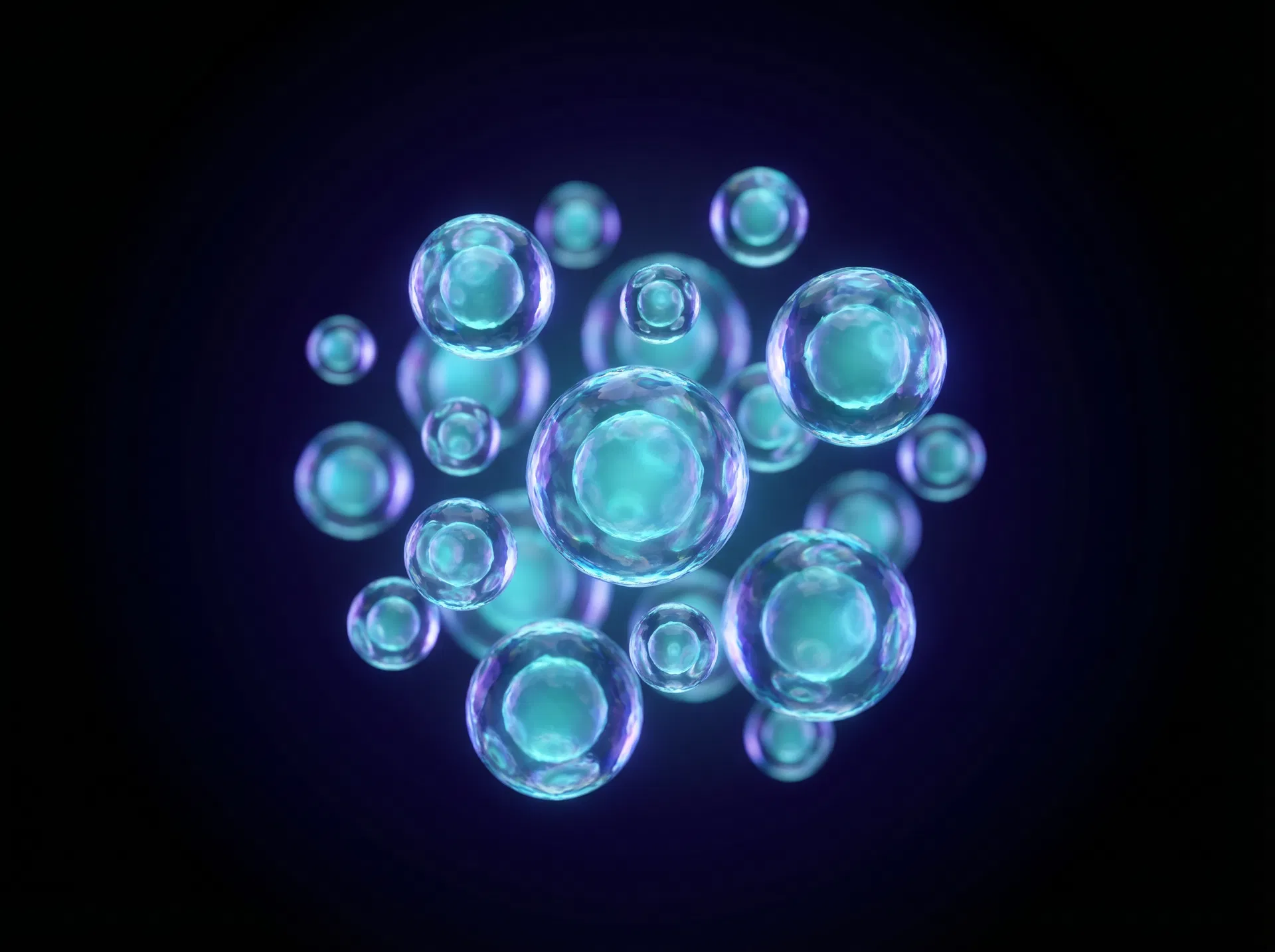
Peer-reviewed literature examining umbilical cord tissue, Wharton's Jelly, UC-MSC conditioned medium, and exosomes in skin and hair-related research. Listed for educational reference only.
Regenerative Medicine in Aesthetics — Research Review
Mesenchymal Stromal Cell-Conditioned Medium for Skin: A Systematic Review
Microneedling with UC-MSC Conditioned Media in Skin — Randomized Controlled Split-Face Study
Clinical Applications of Exosomes in Cosmetic Dermatology
Umbilical Cord Exosomes and Skin Appearance — 40-Subject Study
Wharton's Jelly Stem Cells and Hair Research — Preliminary Study
Literature Citations
- 1.Regenerative Medicine in Aesthetics. Cosmoderma. cosmoderma.org/regenerative-medicine-in-ae
- 2.Montero-Vilchez, T., et al. (2021). Frontiers in Cell and Developmental Biology, 9, 654210. doi.org/10.3389/fcell.2021.654210
- 3.Efficacy of Microneedling Combined With UC-MSC Conditioned Media (2022). Frontiers in Medicine, 9, 837332. doi.org/10.3389/fmed.2022.837332
- 4.Bai, G., Truong, T. M., Pathak, G. N., Benoit, L., & Rao, B. (2024). Skin Health and Disease. doi.org/10.1002/ski2.348
- 5.Umbilical cord exosomes and skin appearance. Journal of Cosmetic Dermatology. onlinelibrary.wiley.com/doi/10.1111/jocd.1
- 6.Wharton's Jelly stem cells and hair research (2021). Advances in Clinical and Experimental Medicine, 30(2), 211. advances.umw.edu.pl/en/article/2021/30/2/2
Aging & Wellness Research Literature
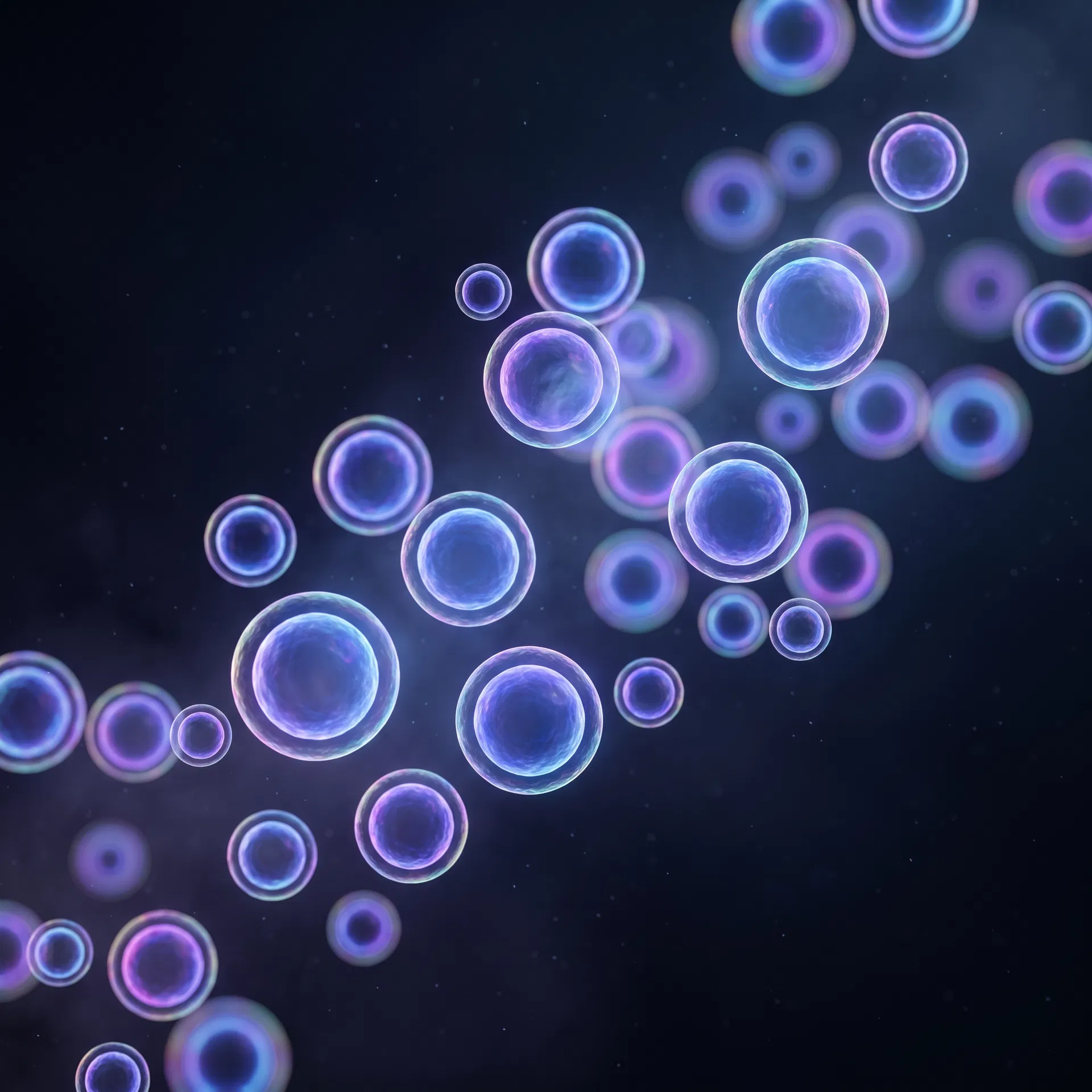
Peer-reviewed literature examining mesenchymal stem cells and umbilical cord-derived materials in the context of aging and systemic wellness research. Listed for educational reference only.
Literature Citations
- 1.Mesenchymal stem cells and the aging process (2023). PMC10116573. www.ncbi.nlm.nih.gov/pmc/articles/PMC10116
- 2.Garay, R. P. (2023). Frontiers in Aging, 4, 1148926. doi.org/10.3389/fragi.2023.1148926
Biologic Characterization & Methods Literature
Peer-reviewed literature on how biologic materials are characterized in research settings — cell expansion and passage level, cryopreservation methods, and comparative evidence maps. These papers characterize the researchers' own research- or clinical-grade preparations; those data do not automatically validate or characterize any separate commercial product. Provided strictly for educational and methodological reference.

Expansion of Human Umbilical Cord-Derived MSCs in Regenerative Medicine
Whole-Transcriptome Scanning and Validation of Negatively Related Genes in UC-MSCs
Trehalose-Based Cryopreservation of Mesenchymal Stromal Cells
Trehalose and Glycerol: A Non-Toxic Recipe for Stem Cell Cryopreservation
Literature Citations
- 1.Rajput, S. N., Naeem, B. K., Ali, A., Salim, A., & Khan, I. (2024). World Journal of Stem Cells, 16(4), 410–433. doi.org/10.4252/wjsc.v16.i4.410
- 2.Tian, L., Wang, W., Li, X., et al. (2024). Heliyon, 10, e27996. doi.org/10.1016/j.heliyon.2024.e27996
- 3.Dovgan, B., Miklavčič, D., Barlič, A., Knežević, M., & Zupan, J. (2021). Cytotechnology, 73, 391–411. doi.org/10.1007/s10616-021-00465-4
- 4.Zhang, T.-Y., Tan, P.-C., Xie, Y., et al. (2020). Stem Cell Research & Therapy, 11, 460. doi.org/10.1186/s13287-020-01969-0
The information on this page is provided for educational and informational purposes only. The referenced literature describes scientific research relating to biologic materials and is not intended to diagnose, treat, cure, or prevent any disease or health condition. There are no representations that any GGEVITYY material is intended for such use. Qualified professionals should consult primary sources and applicable regulatory guidance before making any decisions. Intended use is understood through the access-request process.
Begin a documented, account-based relationship with GGEVITYY.
Access to catalog visibility, documentation, and account-based workflows is reviewed before approval.